High-Fidelity CBRNe Scenarios in Real-World Civilian Environments
CBRN Academy has successfully completed an Advanced Live-Agent Training programme for a national security institution, delivering high-fidelity CBRNe incident response scenarios across a range of complex civilian environments that reflect the operational realities of modern CBRN threat settings. The programme was conducted in connection with the National Training Centre in Vught, the Netherlands — a specialised facility recognised internationally for hosting realistic CBRN exercises and supporting multinational preparedness development activities.
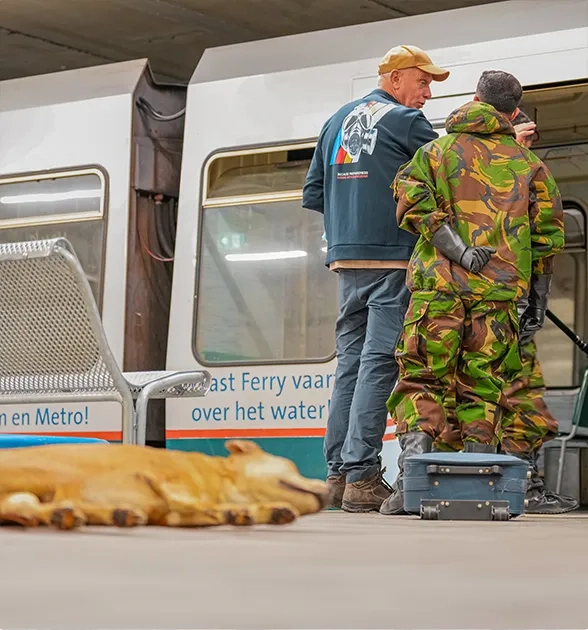
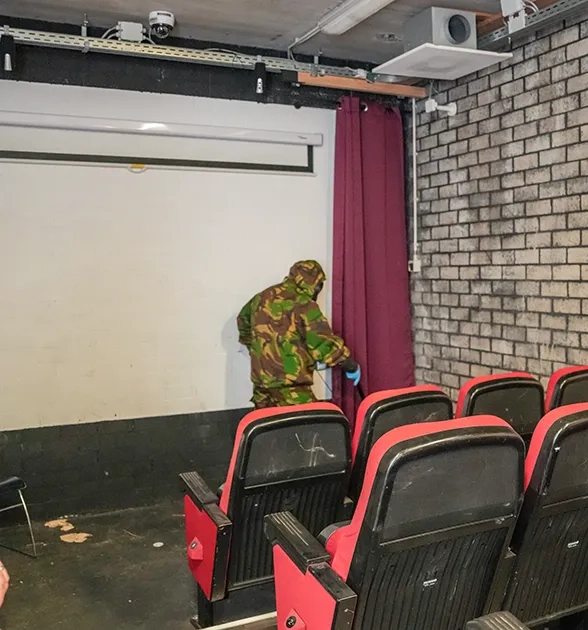
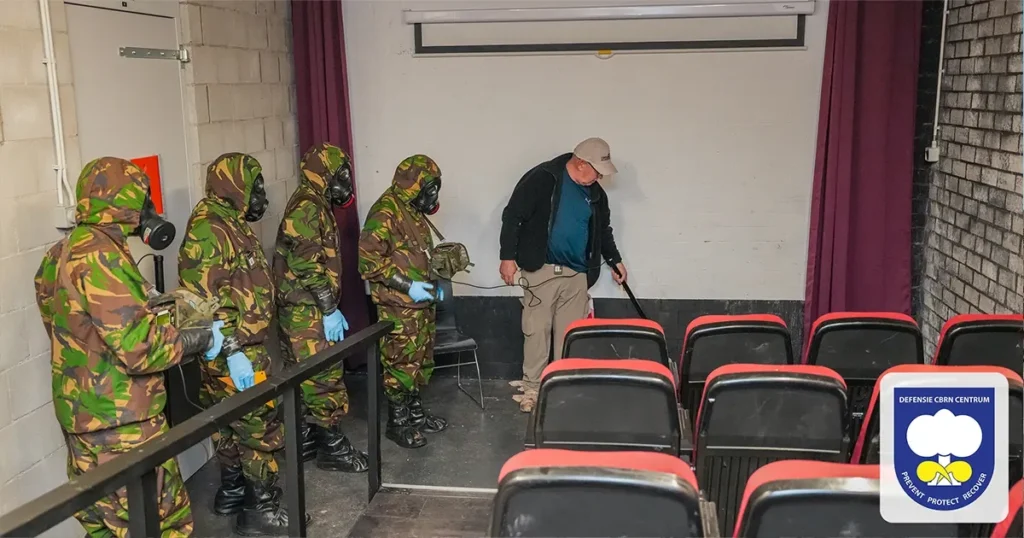
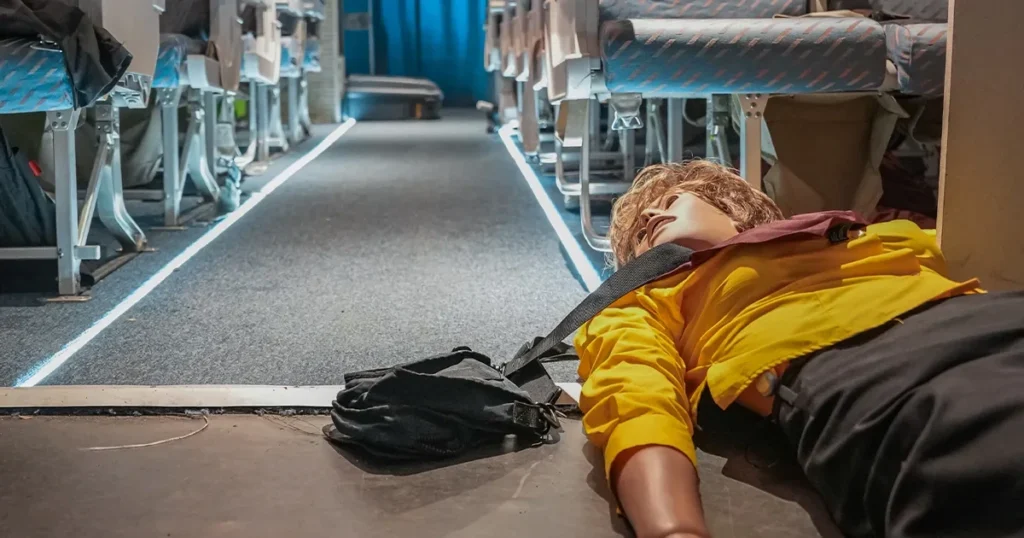
The training programme was distinguished by the diversity and operational authenticity of its scenario environments. Participants executed full CBRN response protocols across metro transportation systems, theatres, restaurants, scientific laboratories, and large commercial hypermarket settings. Each of these environments presents distinct operational challenges: confined spaces with limited ventilation in metro systems, high-occupancy civilian settings with complex evacuation requirements in theatres and commercial venues, and technically controlled environments where chemical release scenarios require precise identification and isolation procedures in laboratory contexts.
The choice to conduct advanced training across this range of scenarios reflects a sophisticated understanding of contemporary CBRN threat environments. Modern security planning must account for the full spectrum of locations where CBRN incidents could realistically occur — and training programmes that limit exposure to a single environment type risk producing personnel who are operationally competent in familiar settings but underprepared for the procedural, spatial, and logistical differences they will encounter across varied real-world incident locations.
The Operational Value of Live-Agent Training for National Security Institutions
Live-Agent Training represents the highest tier of CBRN preparedness development for security and emergency response personnel. Unlike conventional simulation exercises that use inert materials or computer-modelled threat scenarios, LAT exposes trained professionals to controlled environments involving real chemical agents under strict regulatory supervision and safety oversight. This distinction matters profoundly: the real behaviour of hazardous agents — their physical properties, dispersal characteristics, sensory signatures, and effects on equipment performance — cannot be replicated with full fidelity outside of live-agent environments.
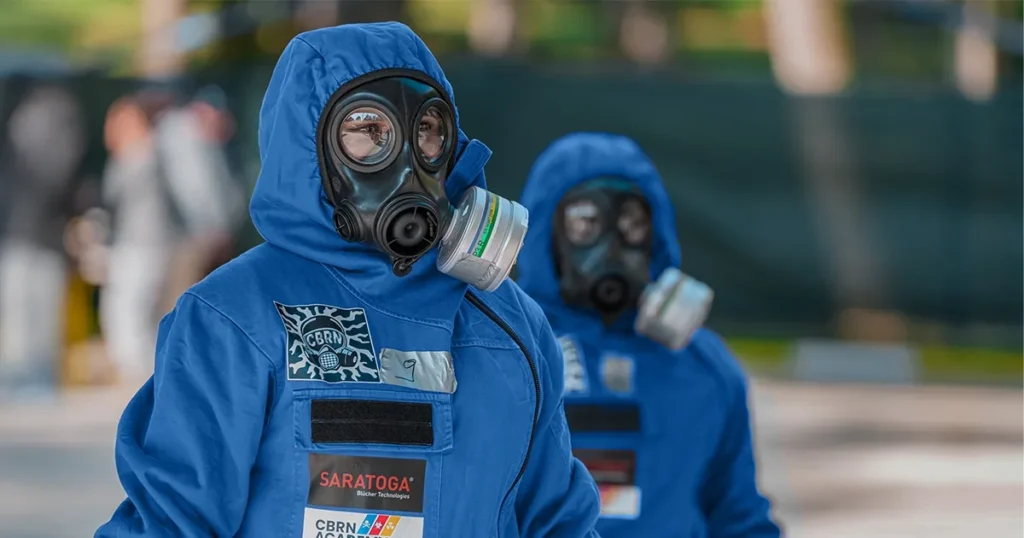
The scenarios executed during the Vught programme were specifically designed to test the depth of participants’ preparedness across the full CBRN response sequence — from initial detection and threat identification through protective equipment deployment, decontamination procedure execution, multi-team coordination, and sustained operations under contaminated conditions. Participants were required to demonstrate operational competence not in familiar training environments but in the complex, variable, high-population settings that define the real-world incident locations national security institutions must be prepared to operate in.
Through advanced programmes such as this one, CBRN Academy continues to develop national and international institutional capability at the frontier of CBRNe preparedness. The completion of this advanced live-agent programme reflects a level of training ambition that distinguishes serious institutional readiness investment from baseline compliance exercises. For national security institutions evaluating the depth and robustness of their CBRNe response capability, the combination of specialist training design, live-agent methodology, and high-fidelity scenario replication that CBRN Academy delivers represents the kind of programme outcome that meaningfully advances operational readiness and strengthens confidence in the preparedness systems on which national security ultimately depends.